

Designing an Eco-Friendly Home
More homeowners are looking for ways to live stylishly without compromising sustainability. We believe that eco-conscious design is not just about reducing impact but about creating spaces that can feel intentional, beautiful, and comfortable for everyday living while thinking holistically about the products we use.
Start With Efficient Systems
Energy efficiency is the foundation of a sustainable home. In Project Hettiefred, we worked with systems that maximize comfort while minimizing environmental impact. Homes that use all-electric HVAC systems, geothermal heat pumps, and energy recovery ventilators maintain ideal temperatures year-round, keep the air fresh, and reduce reliance on fossil fuels. Installing modern heat-pump dryers, induction cooktops, and energy-efficient water heaters can provide similar efficiency for your home.
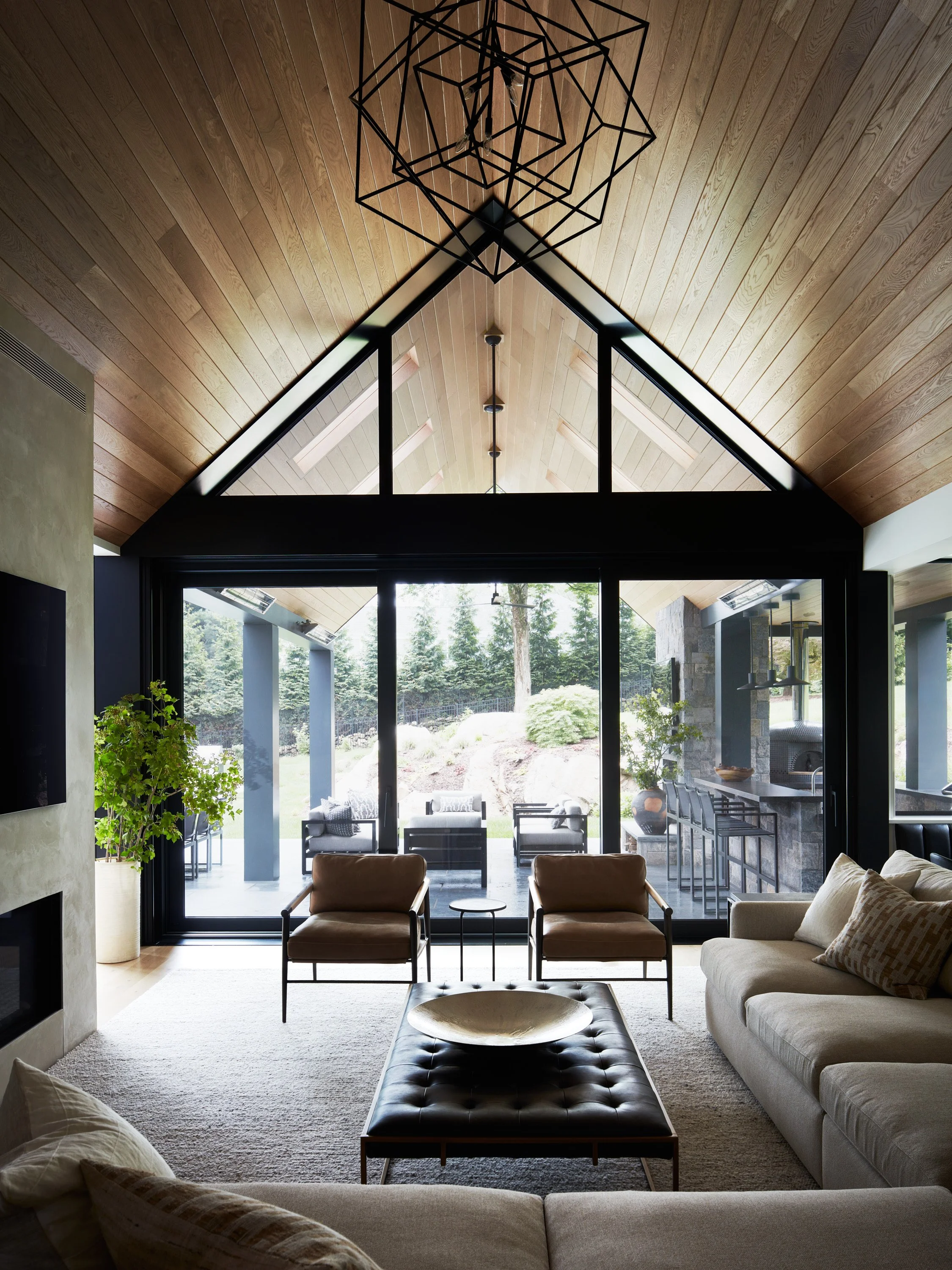
Our Project Hettiefred Living Room in Greenwich Connecticut; Photo taken by Tim Lenz
Make the Envelope Count
A tightly sealed home is a more sustainable home. Proper insulation, triple-pane tempered glass windows, and doors with low U-values dramatically reduce heat loss, keeping energy bills low and interiors cozy. You can incorporate these principles in new builds or renovations to create a bright, healthy environment that also supports energy efficiency.
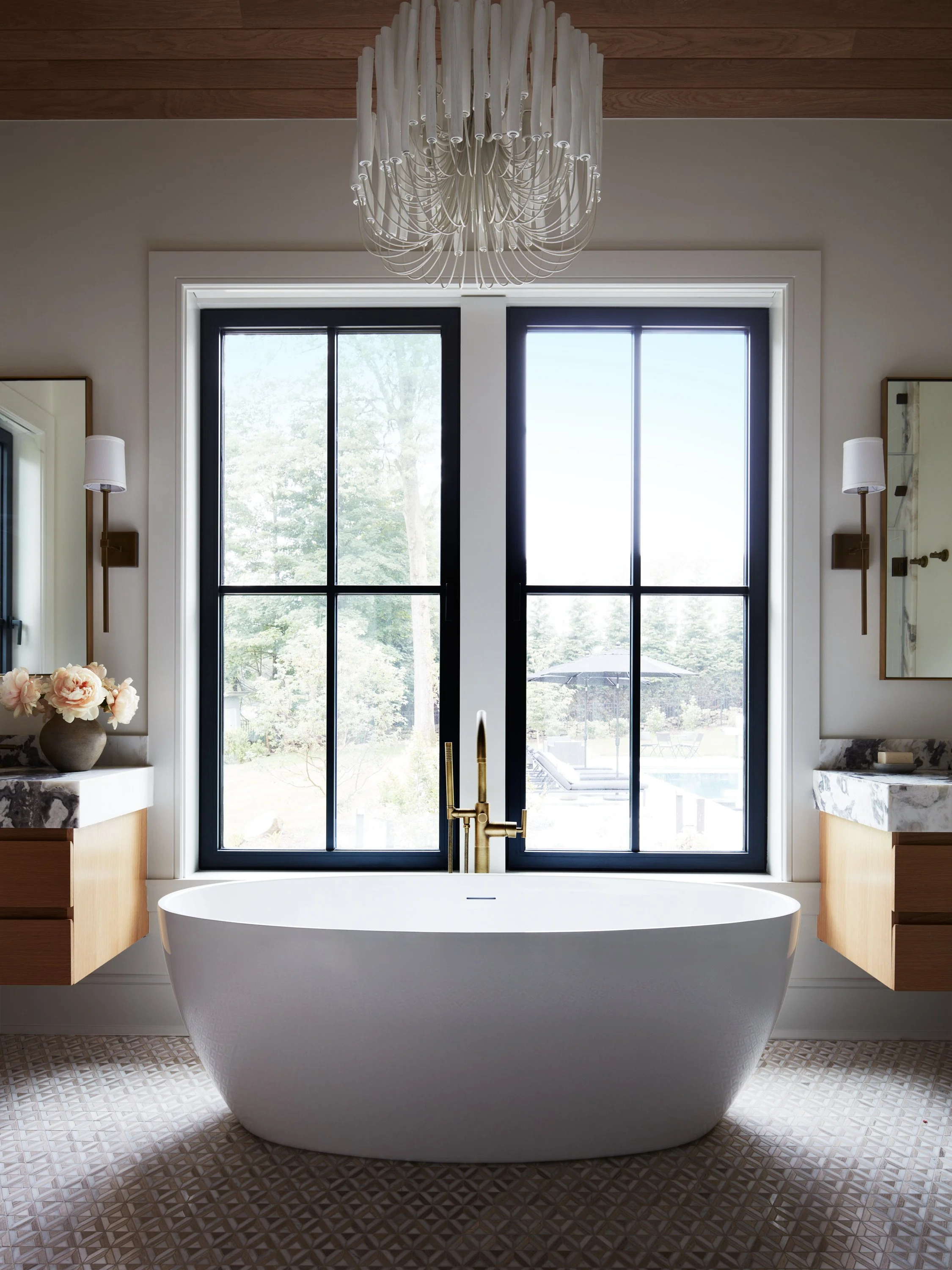
Our Project Hettiefred Master Bath in Greenwich Connecticut; Photo taken by Tim Lenz
Prioritize Materials That Last
One of the simplest ways to make a home more eco-friendly is to choose materials that age gracefully. In Project Lighthouse, our Martha’s Vineyard coastal retreat, we incorporated white oak, cedar, and woven textures throughout the home. These natural materials are not only visually warm and inviting, but they also withstand time, weather, and wear, allowing the family to enjoy a space that will last for generations.
Similarly, in Project Hettiefred, a modern Greenwich, Connecticut home, we embraced exposed wood beams, layered natural textures, and sustainable finishes to create a residence that feels luxurious without over-consuming resources. Using materials that are both durable and beautiful ensures a home can remain timeless while reducing the need for frequent replacements or renovations.
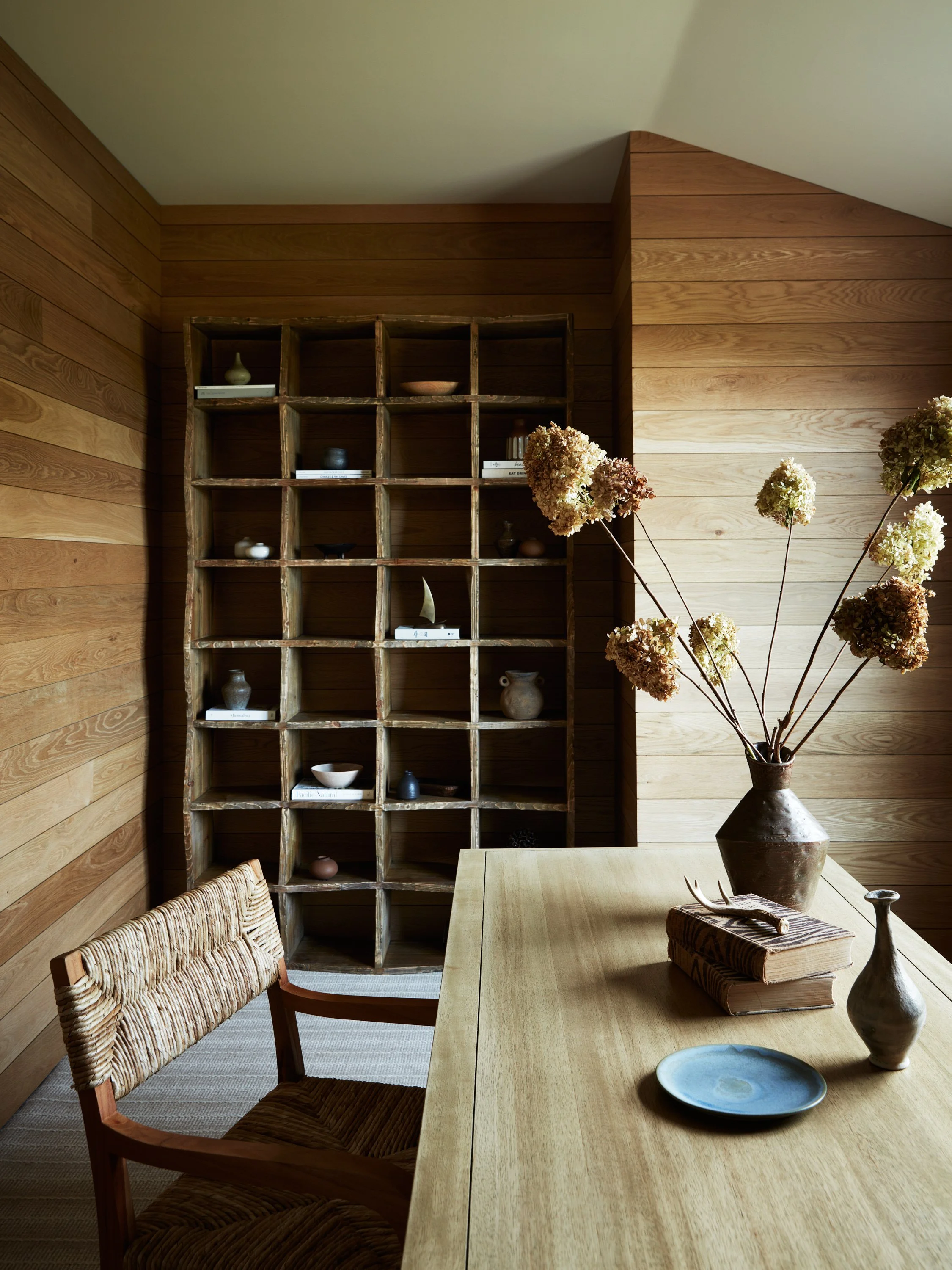
Our Project Lighthouse Study in Martha’s Vineyard ; Photo taken by Tim Lenz
Harness Natural Light
A key principle of eco-conscious design is a strong connection to the natural environment. Large windows, open layouts, and thoughtful orientation allow light, air, and views to become integral design elements. Project Lighthouse features expansive windows and a white oak ceiling that draw in sunlight and ocean breezes, creating a serene interior that feels alive with the surrounding landscape.
In Project Hettiefred, indoor and outdoor living spaces flow seamlessly, encouraging family interaction with nature while reducing reliance on artificial lighting and mechanical ventilation.

Our Project Lighthouse Living Room in Martha’s Vineyard ; Photo taken by Tim Lenz
Energy Efficiency Meets Aesthetics
Solar panels are a cornerstone of modern sustainable living. A roof-mounted solar array can offset household energy use, reduce electricity costs, and contribute to a smaller carbon footprint. In homes like Project Hettiefred, these systems complement energy-efficient appliances and smart building design to create a home that is both functional and forward-thinking.
Also, thoughtful energy-efficient design such as strategic window placement, natural ventilation, and passive heating or cooling can enhance both the functionality and the visual appeal of a space. Our approach in both Project Lighthouse and Project Hettiefred was to integrate energy-conscious solutions discreetly, so the home feels elegant, open, and effortless while minimizing environmental impact.
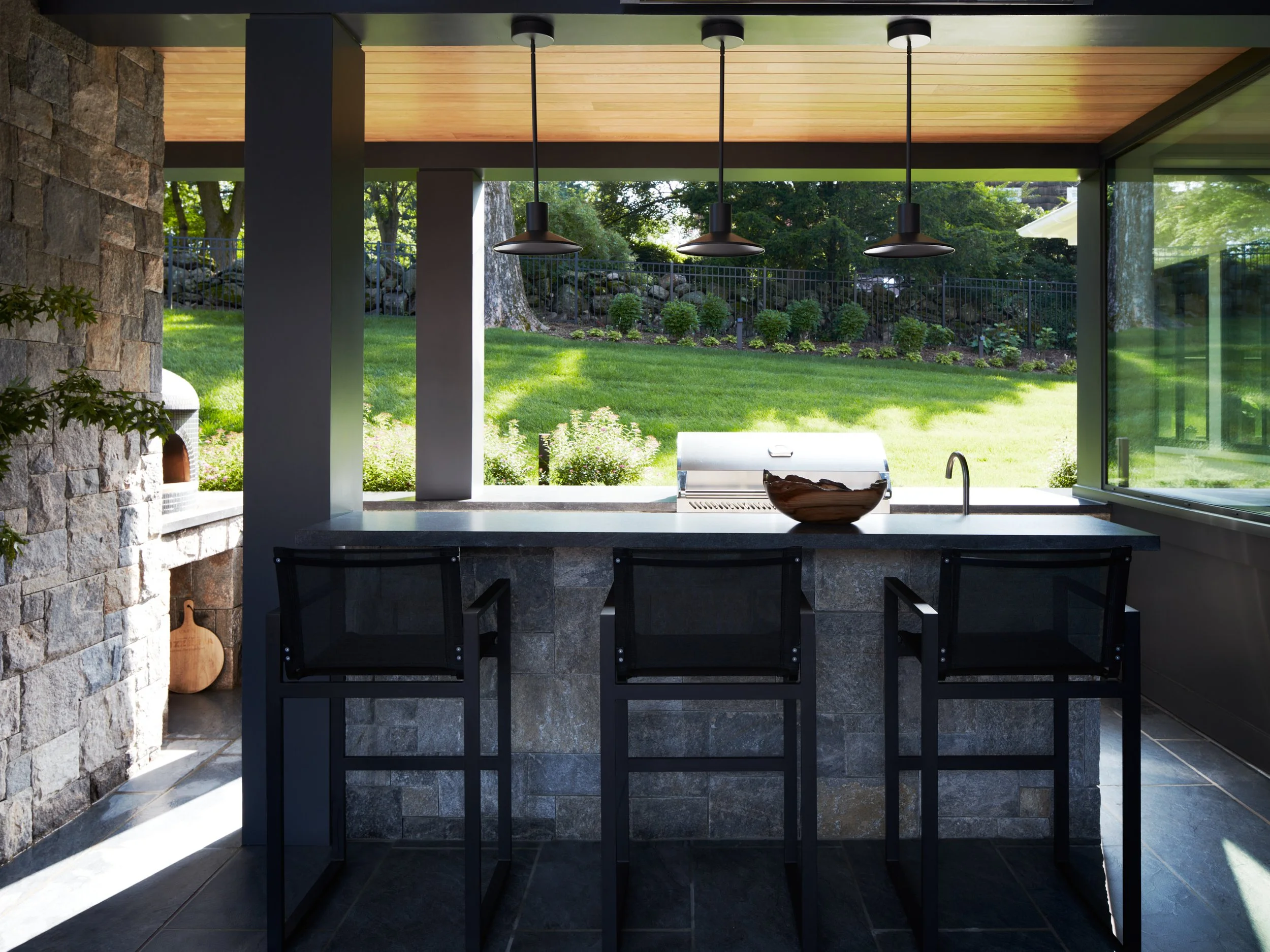
Our Project Hettiefred Outdoor Kitchen in Greenwich Connecticut; Photo taken by Tim Lenz
Layer in Timeless Design
Eco-friendly homes thrive when beauty and function coexist. Using a neutral palette, organic textures, and curated furnishings allows each space to feel intentional and adaptable. Whether it’s a coastal family retreat or a modern Connecticut residence, timeless design choices help the home remain relevant over decades, reducing the need for fast or disposable trends.
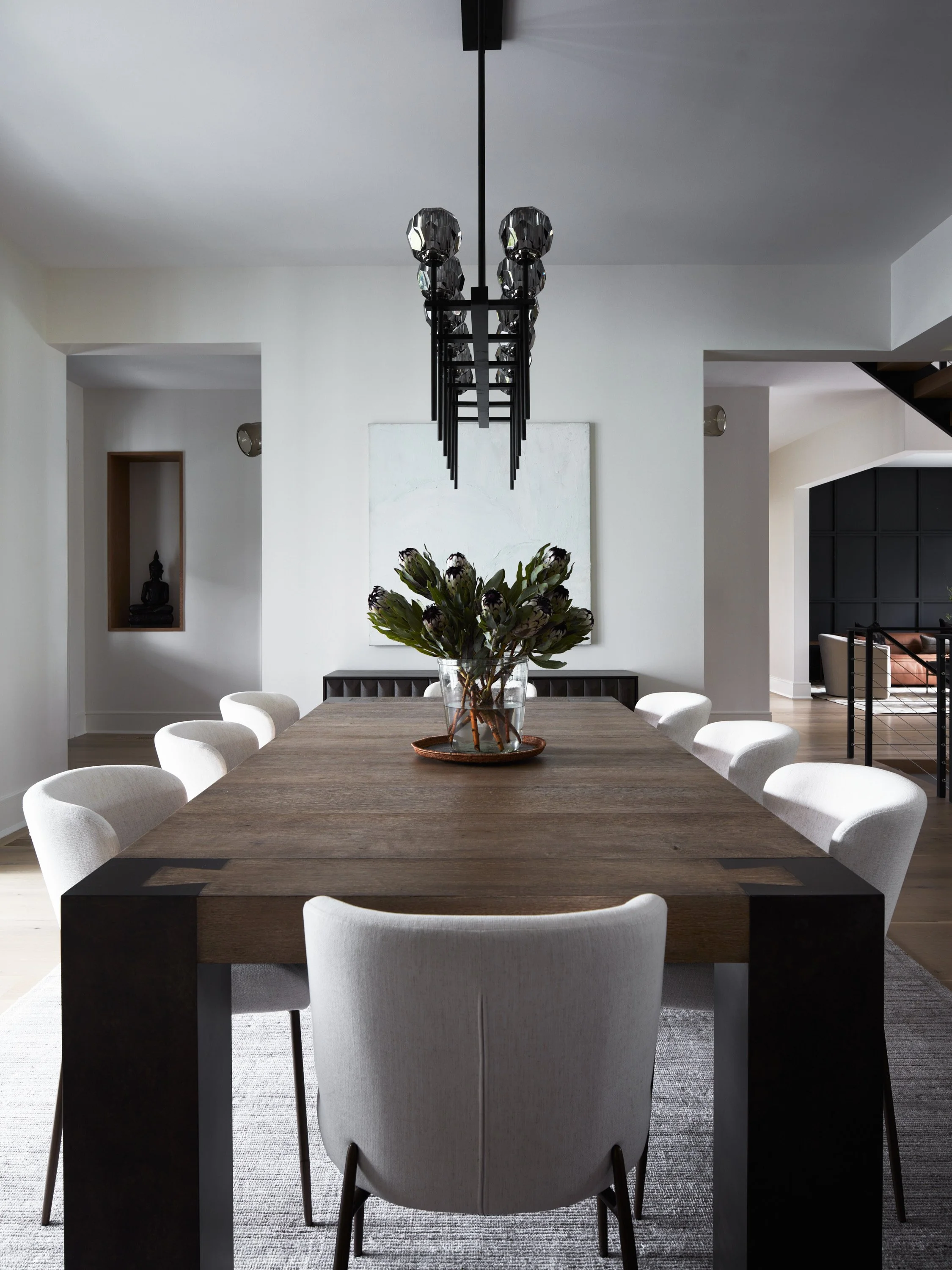
Our Project Hettiefred Dining Room in Greenwich Connecticut; Photo taken by Tim Lenz
Takeaways for Your Own Home
Consider upgrading HVAC systems or appliances to energy-efficient, electric, or heat-pump options.
Maximize natural light with strategically placed windows and reflective, neutral interiors.
Invest in high-performance insulation and triple-pane windows to reduce energy loss.
Incorporate renewable energy sources such as solar panels when feasible.
Layer natural materials and durable furnishings that age beautifully to combine style with sustainability.
Overall, designing an eco-friendly home is about more than sustainability but about creating spaces that feel lived-in, layered, and connected to both people and place. By prioritizing materials that last, embracing the outdoors, and integrating energy-conscious strategies, homes like Project Lighthouse and Project Hettiefred prove that environmentally responsible design can be effortless, luxurious, and deeply personal.