

Choosing the Right Drapery Fabric
Window treatments are often one of the last decisions we make in a project, but they quietly change everything. The fabric at the windows affects how light moves through a room, how sound settles, and how the architecture is experienced. In many Westchester homes, the right drapery fabric can completely shape how a space feels.
In Westchester homes, whether we’re working within Tudor millwork, Colonial symmetry, or shingle-style proportions, drapery fabric needs to support the house's structure, not compete with it.
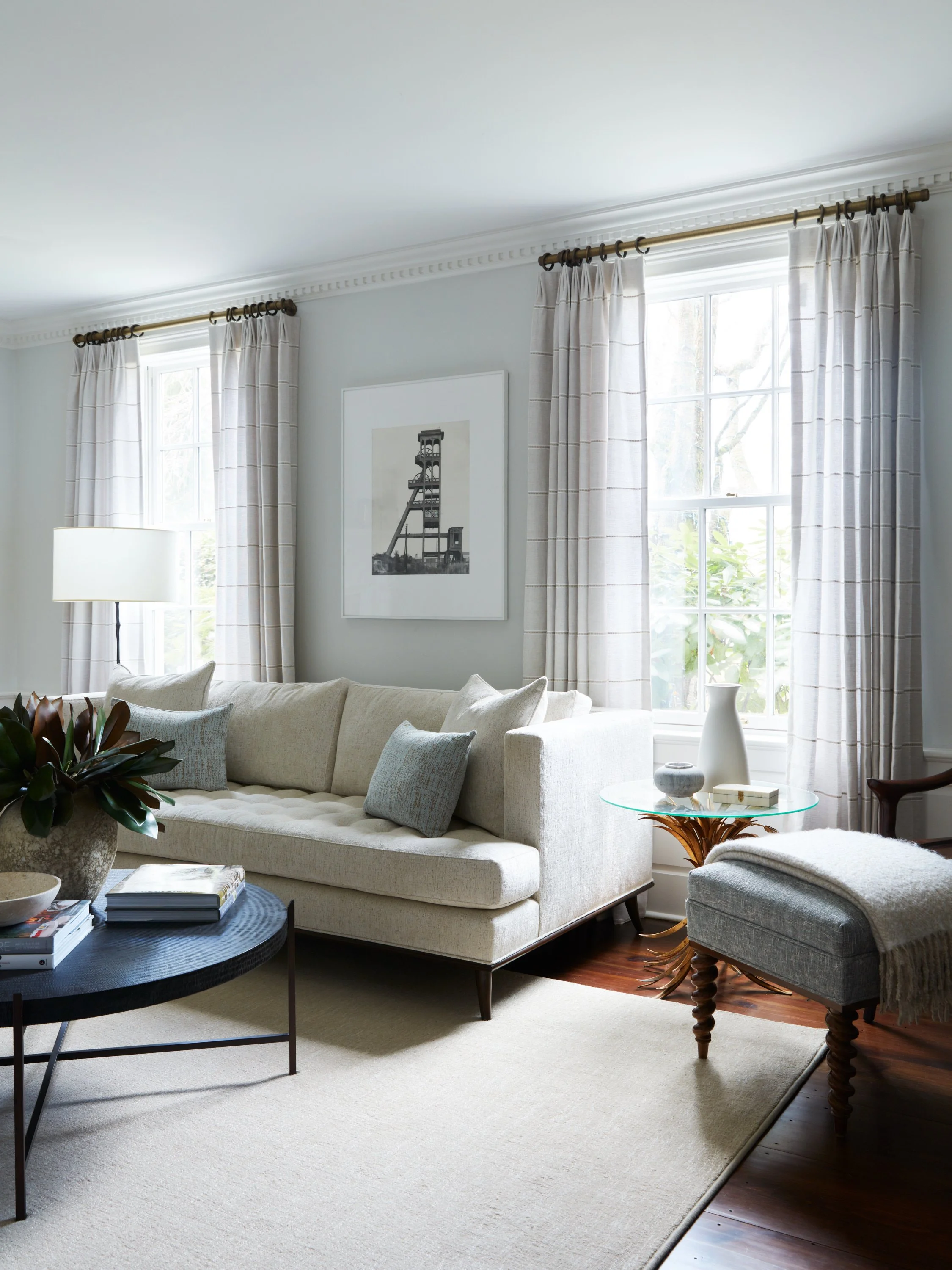
Linen Drapery Panels
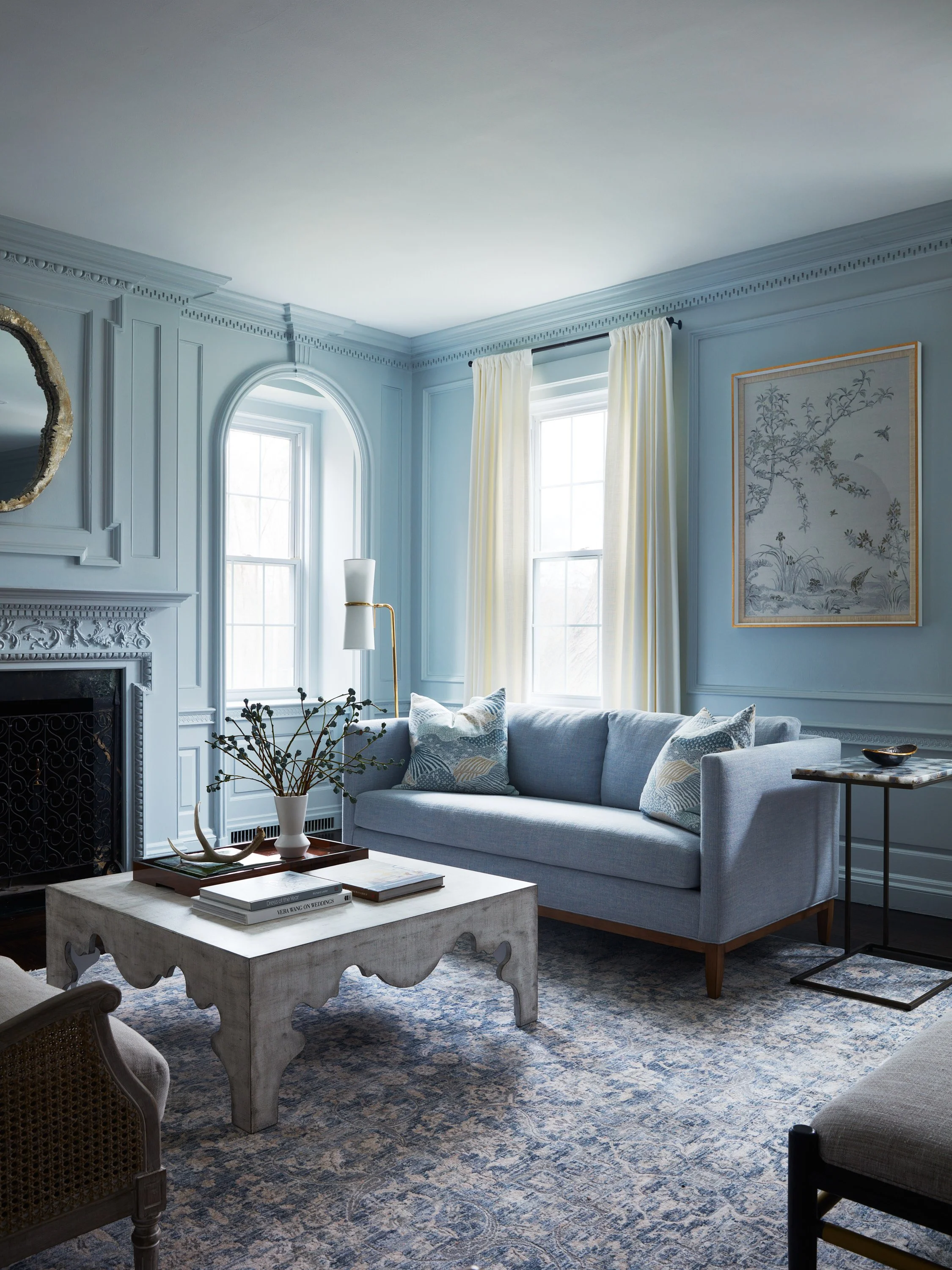
Linen is the fabric we return to often. It filters light softly, moves beautifully, and feels appropriate across architectural styles.
In our Club project, full-height linen panels kept the interiors relaxed but still tailored. In brighter rooms, we line linen for structure and longevity. In darker spaces, we may keep it lighter to prevent the room from feeling weighed down.
Linen works because it feels natural, architectural, and timeless.
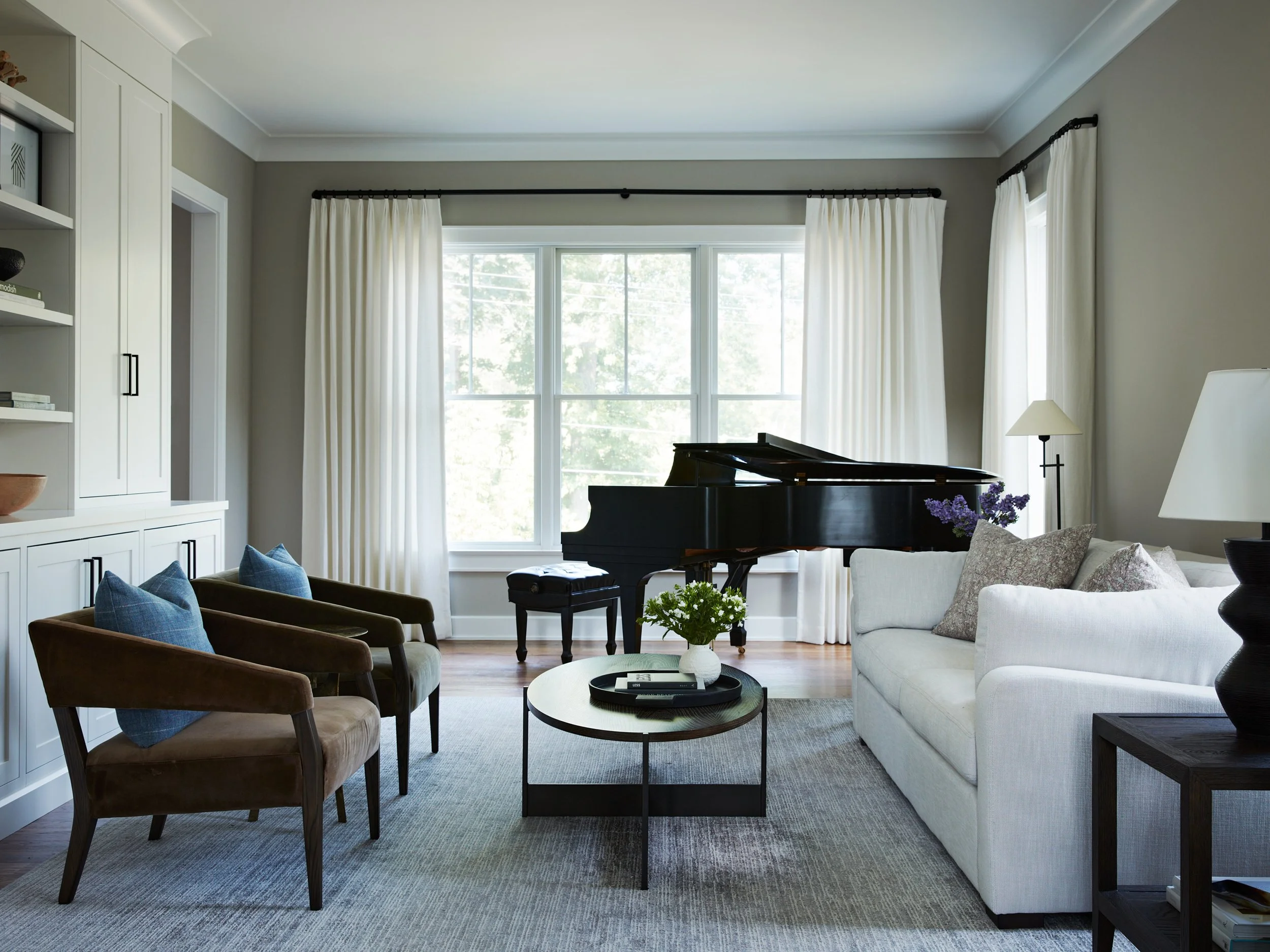
Sheer Window Treatments for Light and Privacy
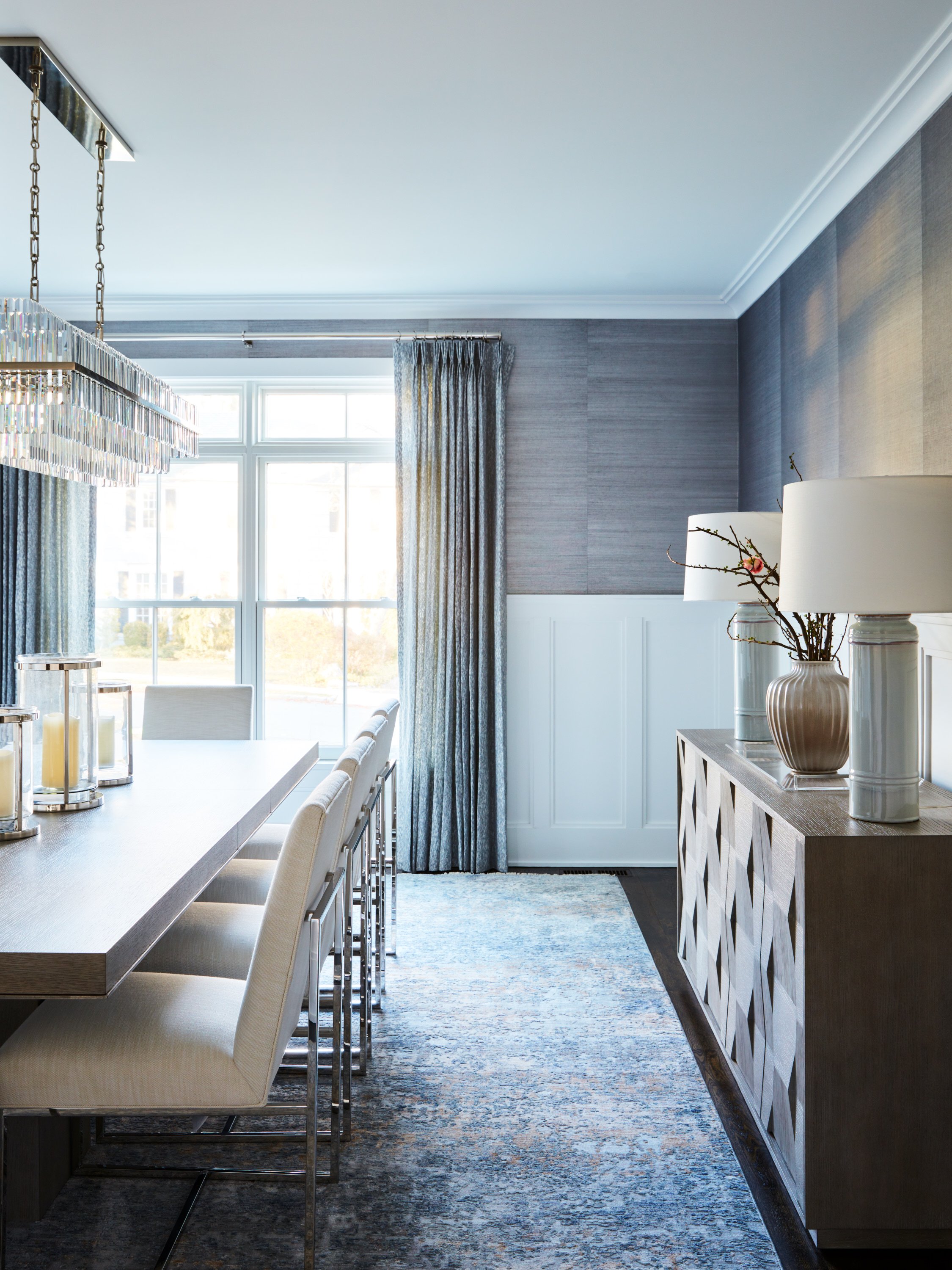
Sheer panels are less about decoration and more about light management. In homes with expansive windows or close neighbors, sheer linen drapery allows for privacy without sacrificing natural light. They can stand alone in more contemporary spaces or layer beneath lined drapery for flexibility throughout the day.
We often layer a Roman shade beneath drapery panels as well. The shade handles the function—privacy and light control—while the panels provide the architectural framing and softness that completes the room.
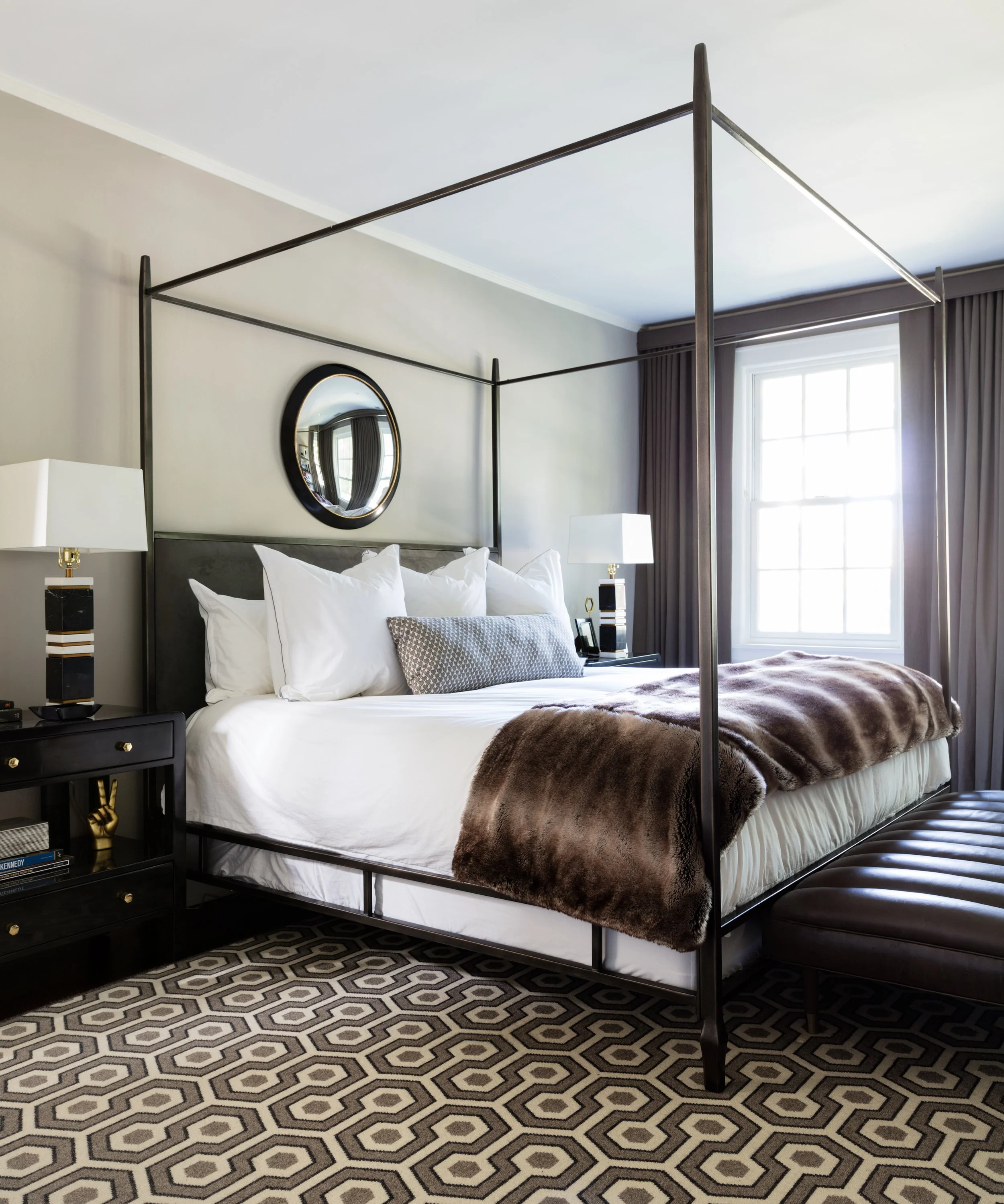
Velvet Drapery for Tudor and Colonial Homes
Velvet brings depth and warmth. It absorbs light rather than reflecting it, which can help ground larger rooms or homes with heavier detailing—something we often see in the Tudor and Colonial architecture found throughout Westchester County.
In this Larchmont bedroom, located in a historic colonial, richer textiles worked alongside the architecture rather than overpowering it. Velvet isn’t about drama for us—it’s about proportion and presence. It can make a bedroom feel quieter or a dining room feel more intimate without adding visual noise.
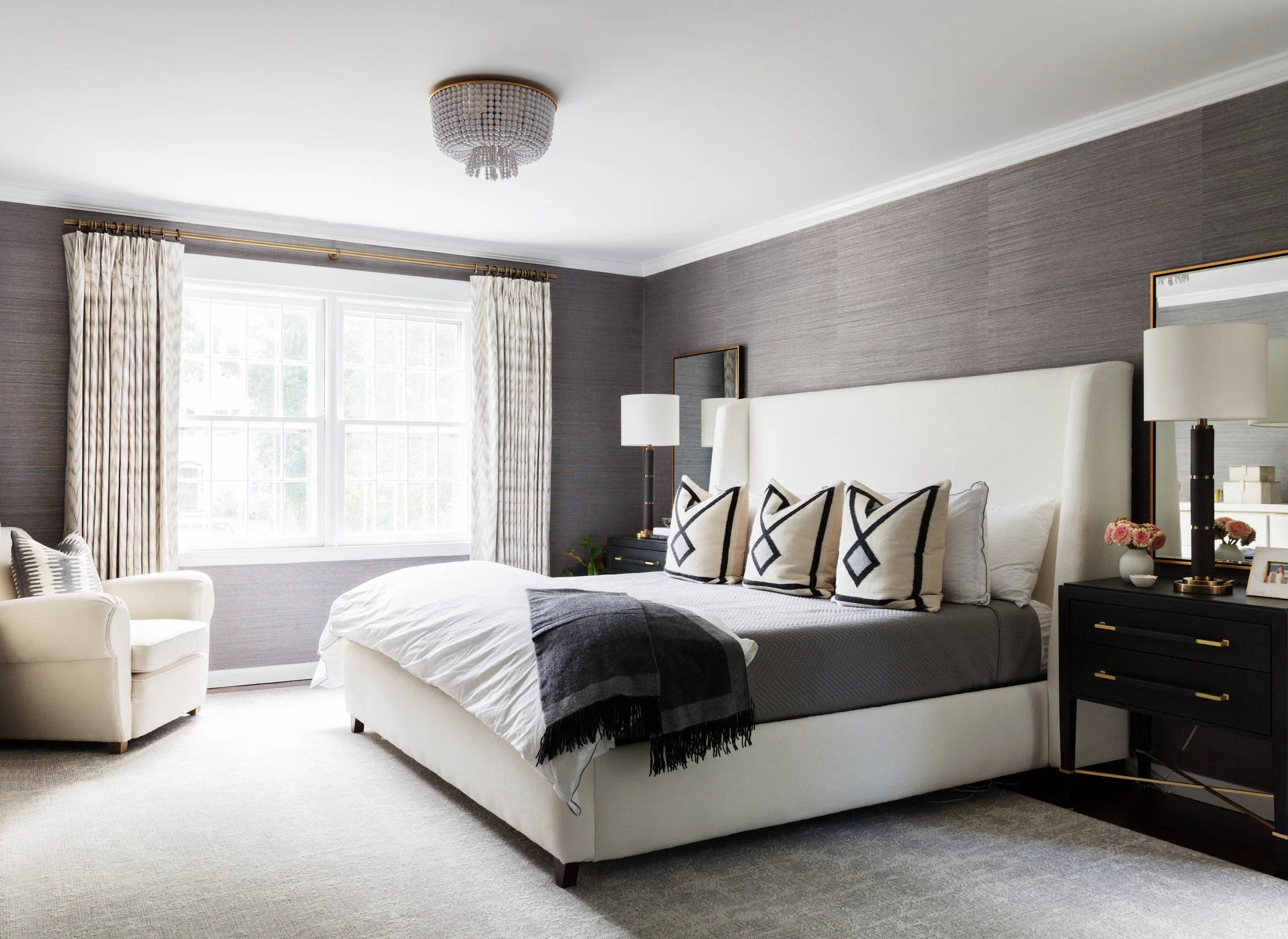
Designing Custom Drapery
When clients ask us about the best fabric for window treatments, the answer depends on architecture, ceiling height, sun exposure, and how the room functions. A primary bedroom may require blackout lining. A family room might benefit from performance fabric. A formal living room may need more body and structure.
As part of our full-service interior design work in Westchester County, window treatments are developed alongside millwork drawings, finish selections, and furniture layouts. We consider proportion and light exposure early in the design process so that drapery feels integrated rather than added.
Scale, weight, and installation matter just as much as the textile itself.
Good window treatments feel integrated, not applied.
How Much Do Custom Window Treatments Cost in Westchester?
The cost of custom window treatments varies depending on fabric selection, lining, hardware, and installation. Linen panels with standard lining will differ significantly from fully interlined velvet with blackout and custom hardware.
In larger homes with detailed millwork and higher ceilings, custom drapery ensures proper proportion and a finished architectural feel. Investment varies by material and fabrication, but the goal remains the same—cohesion with the home.
Frequently Asked Questions About Window Treatments
What is the best fabric for window treatments in Westchester homes?
Linen is often our first choice due to its versatility and softness, but velvet and sheers each serve specific architectural and lighting needs depending on the home.
Are custom window treatments worth it?
In many Westchester homes, especially historic Tudors and Colonials, custom drapery ensures proper scale, proportion, and integration with the architecture.
How long do custom window treatments take?
Lead times vary depending on fabric availability and fabrication, but most custom drapery projects range from approximately 4–8 weeks.
All photos by Tim Lenz.